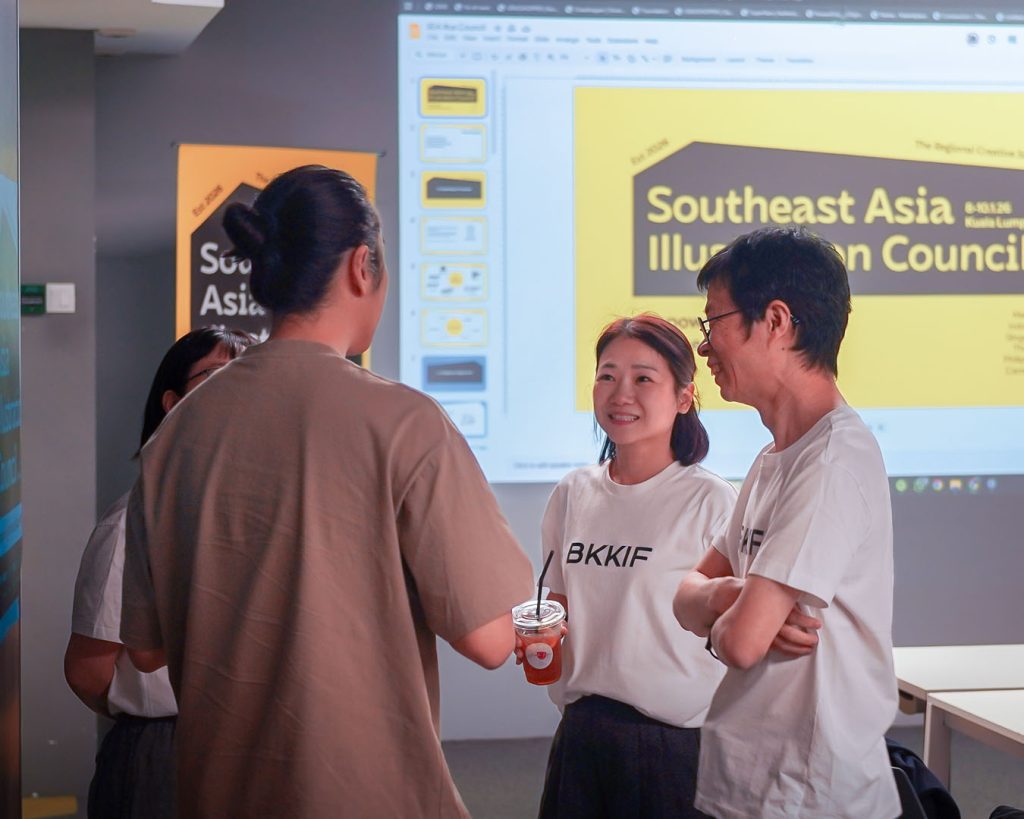
Six countries, six ecosystems, and a shared conversation on how illustration in Southeast Asia is growing, adapting, and defining itself – together. Reflections from the first Southeast Asia Illustration Council dialogue.
KUALA LUMPUR. Last Friday, Kuala Lumpur hosted the first convening of the Southeast Asia Illustration Council. Six countries sat around one table, each carrying different histories, scales, and ways of working. The conversations moved quickly to familiar ground: calendars, audience behaviour, rising costs, and the quiet question that underpins every fair – how long can this sustain both artists and organisers?
Across Southeast Asia, illustration has quietly become a serious cultural and economic presence. Jakarta Illustration & Creative Arts Fair now reports over 20,000 visitors and USD 400,000 in artist sales. Bangkok Illustration Fair and Singapore’s Illustration Arts Fair continue to refine models that balance education, visibility, and long-term viability. At the other end of the spectrum, younger, community-driven platforms such as Manila Illustration Fair and Cambodia’s Phsar Art are still building infrastructure – often with small teams, modest budgets, and a precise understanding of what their local scenes lack.
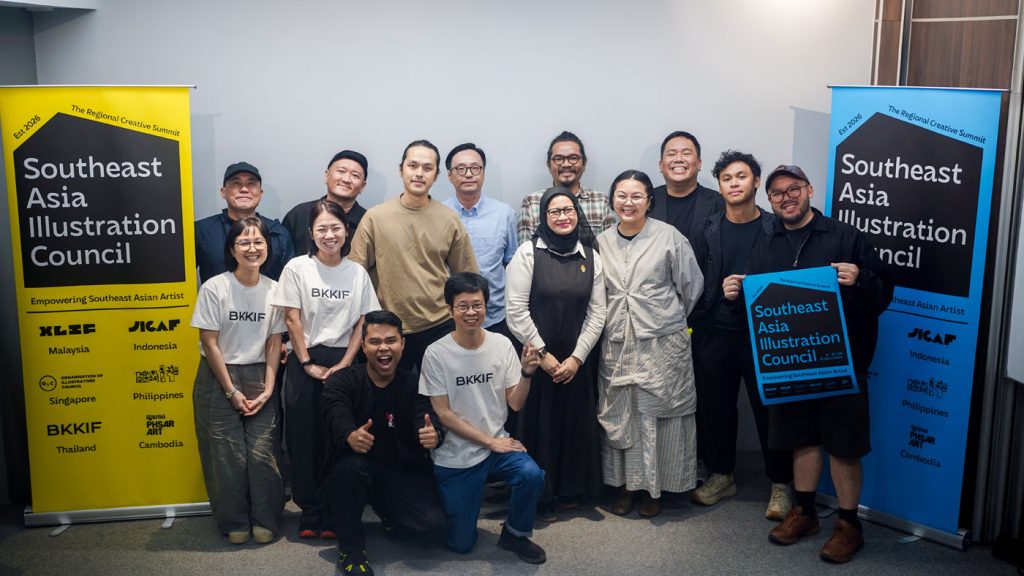
As host from Kuala Lumpur Illustration Fair, the day felt less like leading and more like listening. Despite different formats – markets, revenue-sharing systems, long-form exhibitions -the same concerns kept resurfacing: fair fatigue, artist burnout, and how to cultivate audiences who return with intention, not just appetite. No one arrived with a solution. What emerged instead was recognition, and the quiet charge of possibility.
The council is more than conversation. It is a bridge – between markets and meaning, between lived experience and long-term ambition. For artists, it offers a way to step beyond local walls, to enter regional networks without leaving the room. For organisers, it creates a rare space to compare notes, test ideas, and imagine futures without the pressure of certainty. Around the table, seasoned organisers and newer fairs leaned in with the same urgency: to collaborate, to challenge, and to care for the health of the scene, not just its reach.
“The illustration scene in Southeast Asia is not fragmented so much as plural. It is shaped by different economies, histories, and ways of working, yet bound by shared questions of sustainability and care.” Between Markets & Meaning; Reflections from the first Southeast Asia Illustration Council Dialogue
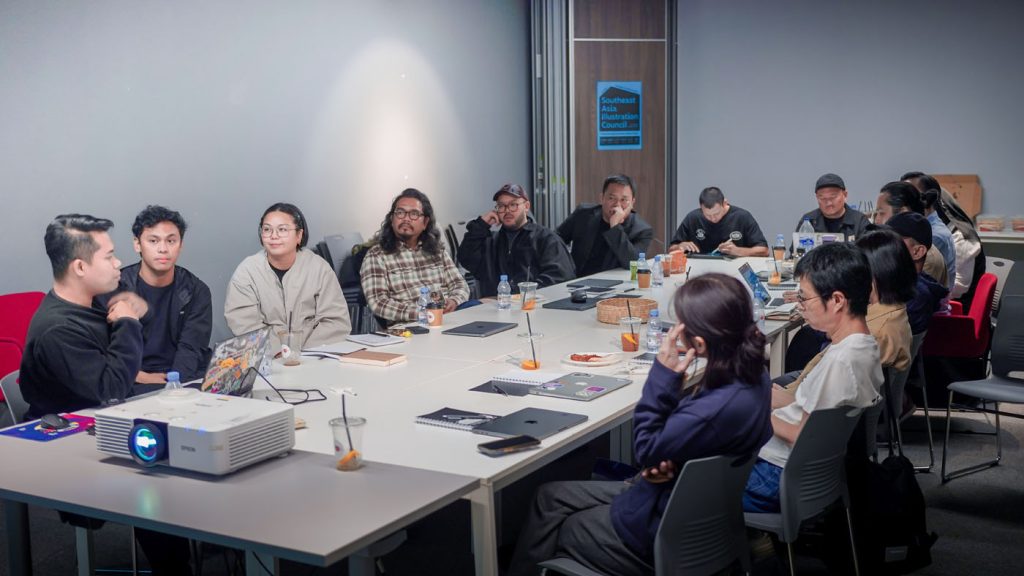
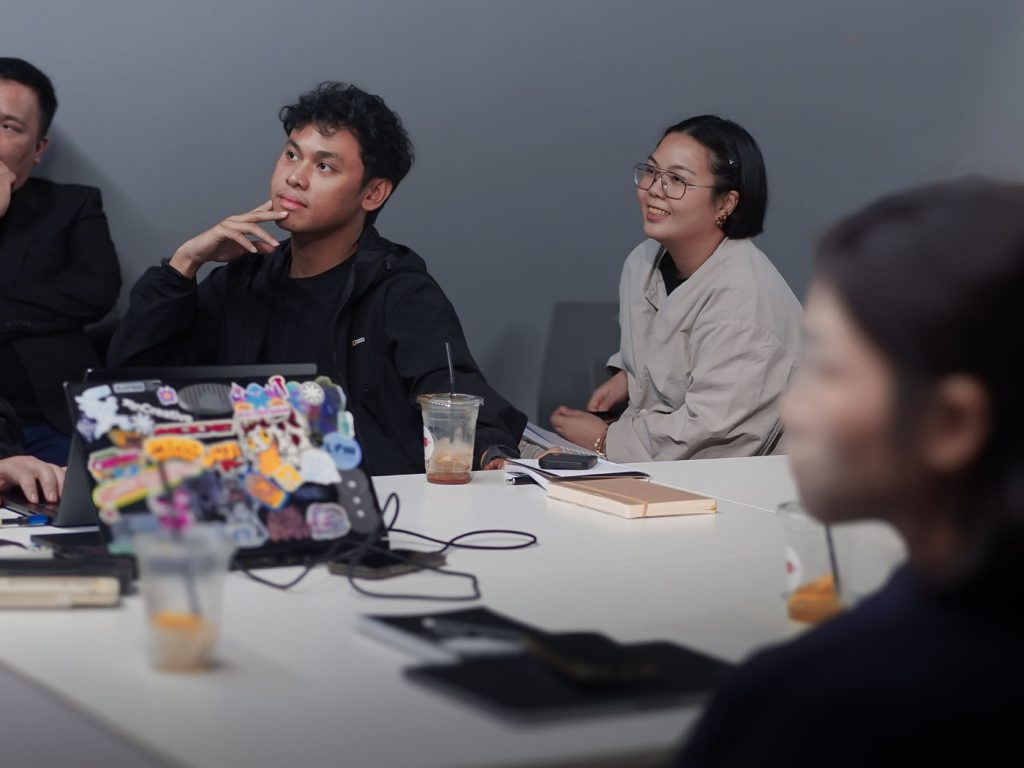
The illustration scene in Southeast Asia is not fragmented so much as plural. It is shaped by different economies, histories, and ways of working, yet bound by shared questions of sustainability and care. It lives between commercial design and personal authorship, between pop culture and cultural memory, between local circulation and global visibility. The council’s role remains intentionally light – an open platform for exchange rather than authority – designed to strengthen cross-cultural dialogue without flattening differences.
The next convening will be hosted in Indonesia. The hope is to widen the circle, invite neighbouring countries into the conversation, and continue building the connective tissue that allows Southeast Asia’s illustrators to move forward – together, and on their own terms.